

The Billionairification of America
The Forbes billionaires list in 2019 numbered 607 in the US. By April 2024, the number had grown by 34% to 813. In 2019, US billionaires held $3.1 trillion in net wealth. This ballooned by 117% to $6.7 trillion at the end of 2024. Note that this represents an acceleration in the tsunami of wealth held by this incredibly small fraction of the fabled wealthy in the top 1% (3.4 million people out of a total population of 340 million).
BTW: The total wealth of the bottom 50% of the US population is $3.6 trillion. The bottom 11% (37 million people) have a net worth of $0 or less.

The central driver of the billionairification of America is their long-term control over government. For all of the rhetoric of conservatives about getting government out of the way, the facts are that the rich and corporations love government. They employ it for their ends every day. And, they have done so for the last fifty years, aided by politicians in both the Republican and Democratic parties.
If you want a quick introduction to the basics, take a look at two presentations from more than ten years ago: We the People, and the Republic we must reclaim by Lawrence Lessig from 2013 and Take the Money and Run for Office from This American Life from 2012. The situations described have only intensified over the ensuing decade-plus.
Lobbyists work to ensure that the interests of the rich and corporations are safeguarded through legislation and regulations. There are 435 members of Congress and 100 Senators. In 2021, there were 12,136 registered lobbyists in Washington, supported by over $3.73 billion spent to influence legislation and regulations. This amounts to $6,972,000 per legislator and involves 23 lobbyists for each member.1
The 11.21.2025 Washington Post contained an article that only adds to this story. How billionaires took over American politics
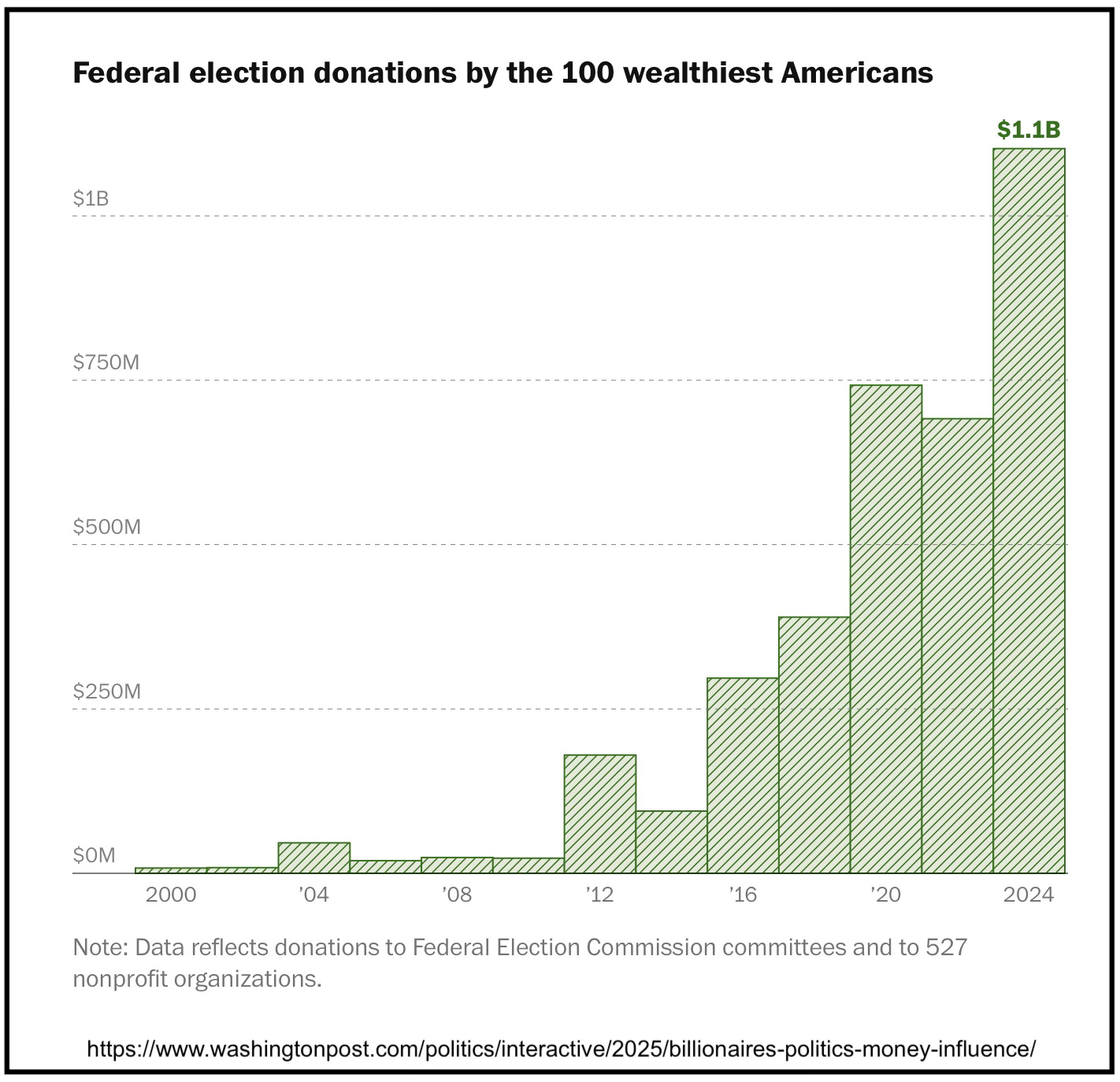
Since this report accounts for only 100 of the 803 billionaires in the US, you can consider it a gross understatement of the control the rich and their corporations exert over government.
Changes in Law and Regulations under the Government by the Rich and Corporations
Here is a brief list of the highlights of changes produced by the fifty years of rule by the rich and corporations:
• Deregulation of industries (trucking, airlines, telecommunications, banking and financial services)
• Weakened enforcement of antitrust (anti-monopolization) regulations
• Financial deregulation
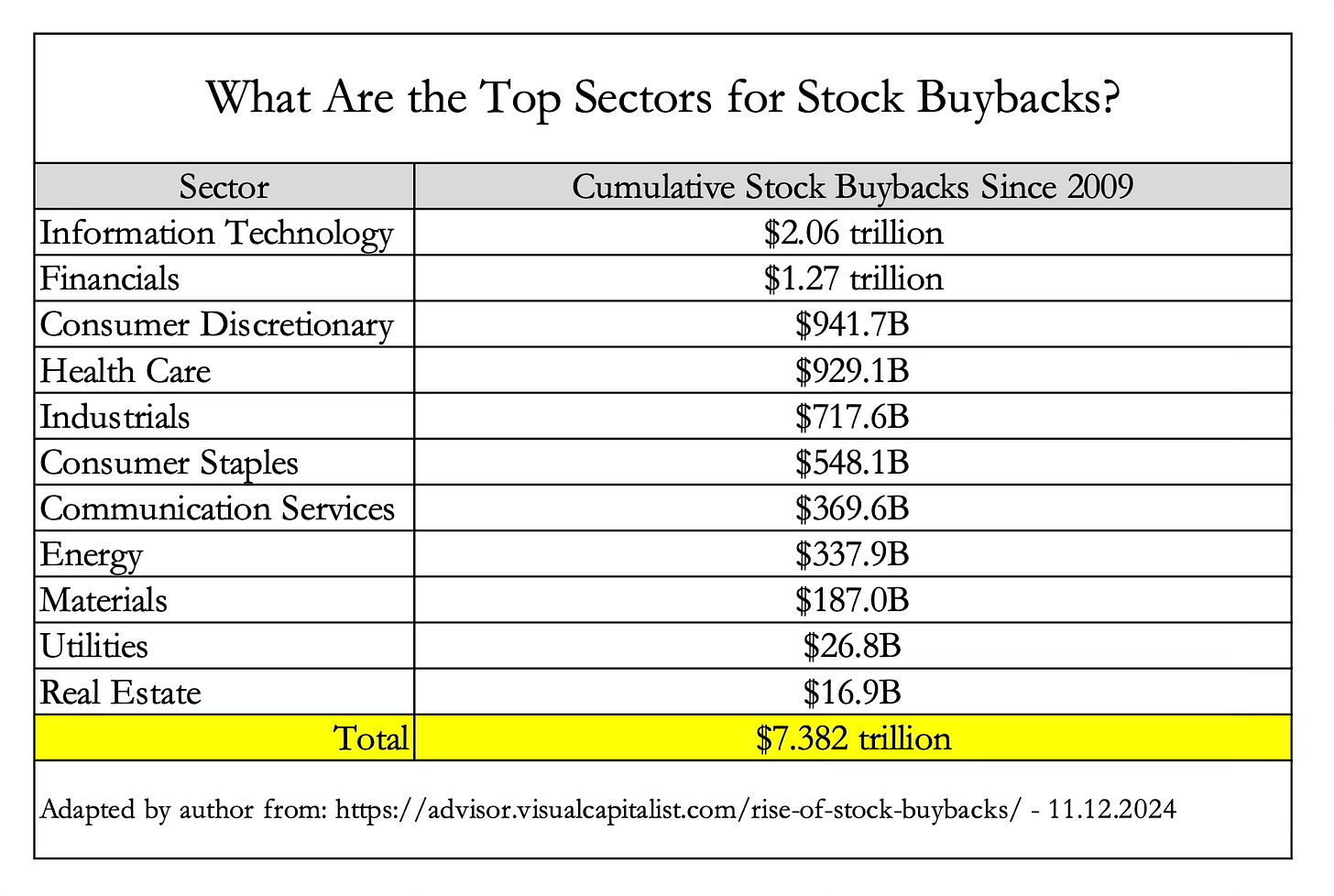
• Legalization of stock buybacks2
• Tax cuts for corporations and the rich.
• Welfare cuts to reduce government assistance.
• Global trade and finance liberalization (NAFTA, WTO).
• Weakening of labor laws and union influence.
Just to take stock buybacks as an example. This use of corporate profits has resulted in the transfer of vast wealth through stock price manipulations and a reduction in corporate reinvestment of profits in new products and services. NB – for comparison, keep in mind that the entire US economy produced a GDP of $27 trillion in 2023.
Don’t Ever Refer to America as a Democracy!
As a well-known empirical study3 of the impact of all this money on who influences government policies summarizes the situation:
“…the preferences of the average American appear to have only a minuscule, near-zero, statistically non-significant impact upon public policy.…economic elites and organized groups representing business interests have substantial independent impacts on U.S. government policy.”
I love the poetic efforts to describe how little average Americans matter, “minuscule, near-zero, statistically non-significant” – a surprising turn of phrase in an academic paper.
The Most Successful Social Movement of the Last 100 Years – Class Warfare in Reverse
Footnotes
- “In 1975, there were 1,172 lobbyists registered in Washington—roughly 3 lobbyists per legislator.
- A stock buyback occurs when a company uses company financial resources to buy its own shares on the market. The reduction in the number of shares outstanding in the market produces a rise in the price of the remaining shares.
- Gilens, Martin, and Benjamin I. Page. “Testing Theories of American Politics: Elites, Interest Groups, and Average Citizens.” Perspectives on Politics 12, no. 3 (2014): 564–81. https://doi.org/10.1017/S1537592714001595.
Leave a Reply