

no, it’s not the national debt
Our politicians and innumerable academics, experts, bankers, and corporate chiefs reflexively pronounce that our national debt is unsustainable, our children and grandchildren will be bankrupted forever by the wasteful spending of the Federal government. We need to act like responsible people. And, we have the National Debt Clock in Times Square. NYC.1
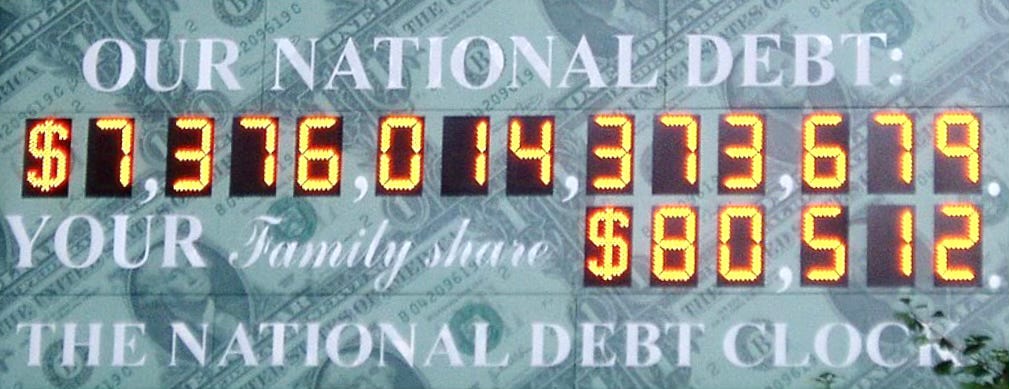
They all speak of the Federal budget as though it is a family or corporate budget. This is nonsense and the entire history of the US proves this. With the exception of a few years, the Federal government has spent more than it taxes since its founding in 1787.

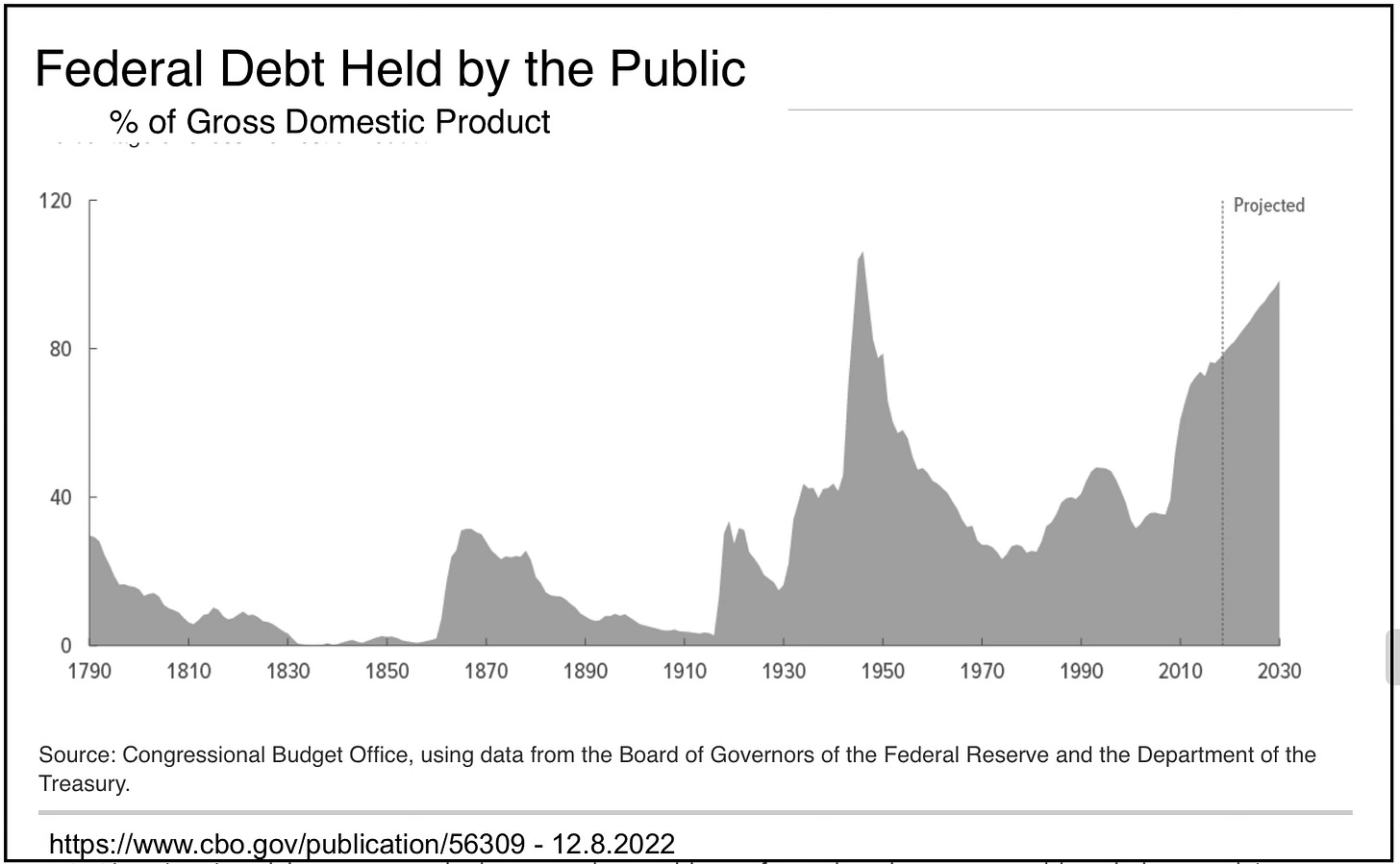
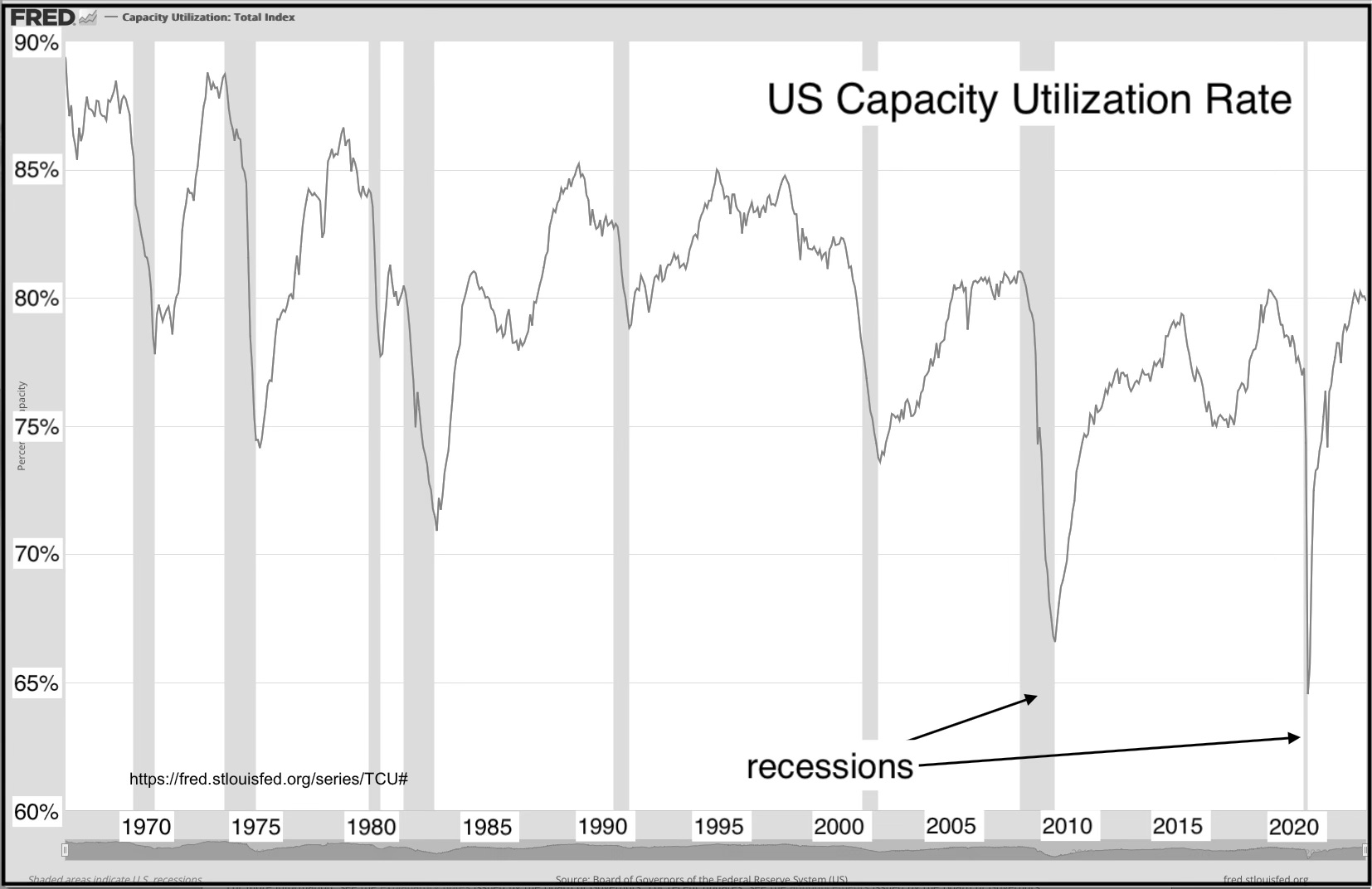
And, as the issuer of currency, the Federal government cannot run out. The government can always call on the resources of our society that are underutilized to achieve policy objectives. This is a strategy that has been relied on over and over throughout our history. The only real limitation on this power is that if the dollars issued are aimed at a sector of the economy that is in fact near or at full utilization, inflation will ensue. The grandest scale of this phenomenon is evident in the history of WWII’s enormous debt-funded expansion of war production.

Debts matched by Assets
Another point completely lost on the Federal debt mongers is that every dollar of debt is matched by someone in the private sector holding a matching asset. The real situation of our Federal debt is located in a new National Debt-Asset Clock.

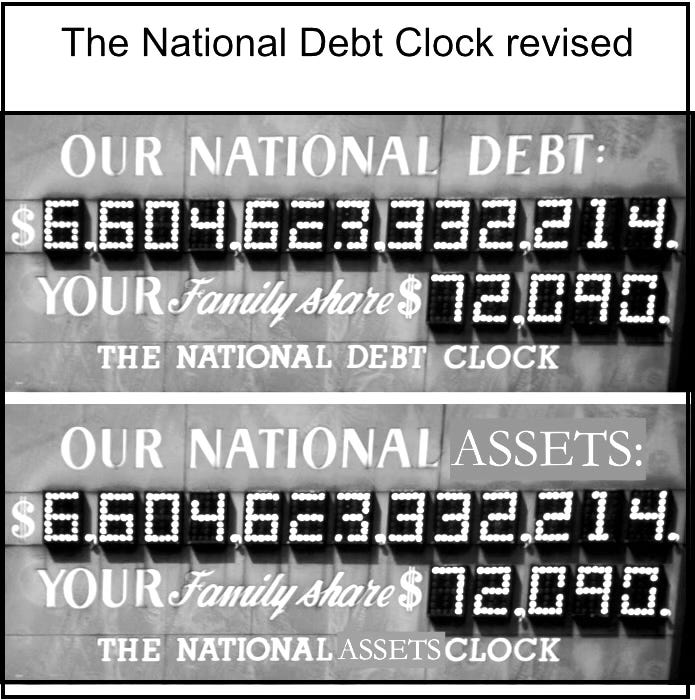
The fact of the matter is that when the Federal government spends more than it taxes, it is creating assets in the private economy.
Debt is a concern. Private debt.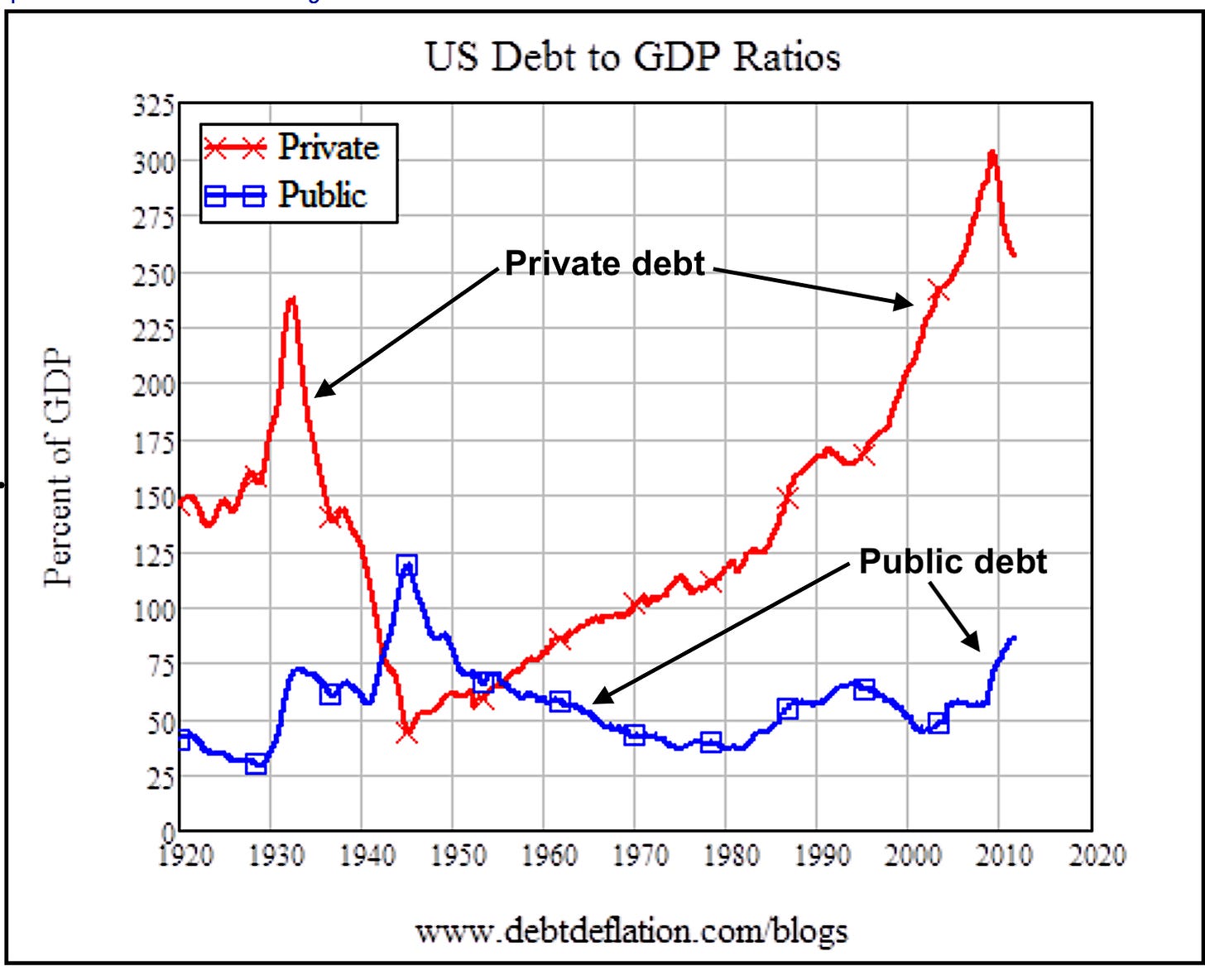
There are a number of theories about the origins of the Great Depression and 2008-9’s Global Recession. Here is one that focuses on the expansion of private debt as a key driver.
Hyman Minsky’s Financial Instability Hypothesis
Minsky proposed his “hypothesis” in the 1960s and 1970s as an explanation of the Great Depression of the 1930s. The sequence of events can be summarized as follows:
• Debt Accumulation: Excessive borrowing by individuals and institutions leads to high leverage levels.2
• Speculative Investments: Increased investment in risky assets based on the expectation of continuing price increases.
• Loss of Confidence: A sudden shift in investor sentiment that triggers panic selling.
• Liquidity Crisis: The inability of financial institutions to meet short-term obligations due to a sudden withdrawal of funds or inability to refinance debt.
• Asset Price Collapse: A rapid decline in asset values exacerbates financial instability.
The present situation in 2026 puts us in the speculative investmentphase of another speculative bubble in AI. The exact size of the private debt bubble is a bit difficult to know because so much of the credit used by corporations is coming from private, largely unregulated, sources. But, we should be concerned by the giant balloon of specualtion that has marked the stock and bond markets over the last 15 years.
Leave a Reply